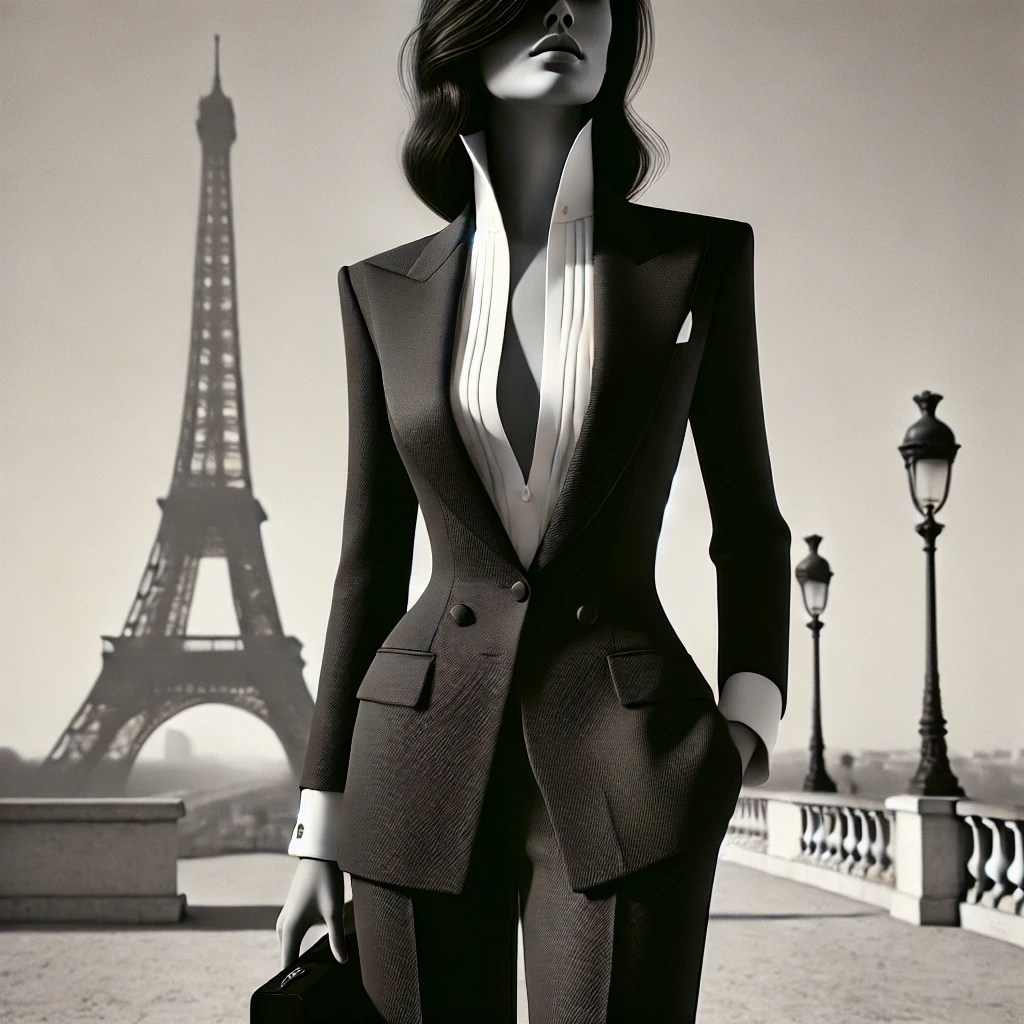
The 1970s of Paris marked a seismic shift in the world of fashion. This era represented the departure from the exclusivity of haute couture, to the accessibility of quality garments at affordable prices. As a revolutionary response to social changes, designers began mass-producing fashionable yet practical items to meet the demands of youth culture. This gave rise to the ready-to-wear era in Paris, where luxury fashion converged with everyday wear.
Leading into the 1970s, the women’s liberation movement profoundly influenced fashion. As the movement challenged traditional gender roles and expectations, it paved the way for more practical, comfortable, and expressive clothing. It allowed women to step away from restrictive garments to more modern-day silhouettes. Blurring the line between ‘masculine’ and ‘feminine’ attire, the Parisian ready-to-wear era ultimately produced unisex fashion.
The pantsuit – the pinnacle symbol for women’s empowerment. This decade led women to expand the boundaries of feminine attire, allowing trousers, blazers, and button-down shirts to be as much of their wardrobe as they were to men. Fashion designer Yves Saint Laurent pioneered the ‘Le Smoking’ tuxedo suit for women in the late ‘60s, highlighting femininity while offering a bold statement. Leading into the ready-to-wear era, youth culture embraced this movement from exclusivity to unifying women’s style through fashion.
As women fought for equality, fashion quickly became a symbol of expression and individuality. Straying away from frills and corsets, Paris took the initiative to be minimalistic. Women had a choice. They began to break the boundaries of societal norms that had been around for generations. It marked a time when women gained access to simple, chic, and empowering clothing that captured the essence of ready-to-wear by combining style with practicality.
Ask yourself, why did this fashion era define history? It’s because fashion became intertwined with celebrity culture. Actors, musicians, and other public figures influenced minimalist trends. They contributed to the movement of practicality and inclusion among women. Public figures Bianca Jagger and Jane Birkin quickly became trendsetters by always wearing the new ready-to-wear collections by Parisian designers. By curating an influence on society, fashion remained inclusive and continually adapted to society’s wants and needs throughout the 1970s.
Reflecting on this decade, the ready-to-wear era of Paris made a lasting impact on the fashion industry. It paved the way for designers to make fashion more accessible and affordable to the mass public. This innovation allowed fashion to be expressed in a more modern-day landscape, represented in the fashion trends we have today. Paris created a movement in fashion. They expanded their audience and adapted to societal changes. With its constant innovation and versatility, Paris continues to hold its place as fashion capital of the world–and will for years to come.
Featured image is generated by AI.
 Home Page
Leave a comment