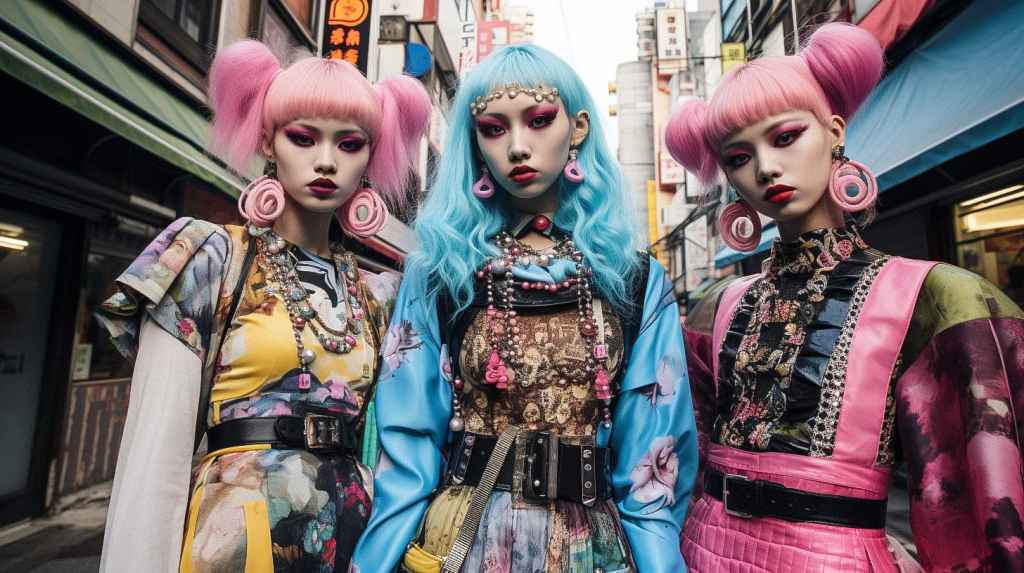
The early 2000s was a transformative period for Japanese fashion. Influenced by global fashion trends and Japanese aesthetics, Tokyo became the fashion hub showcasing bold, electric styles that reflected anime, manga, and Japanese video games. This era symbolizes the explosion of street fashion styles that illustrate vibrant colors, cartoon-like patterns, and gothic-inspired looks.

Image from Pinterest.
What are anime and manga? How did they influence Japanese fashion?
Manga are Japanese comic books and graphic novels published weekly in black and white. Anime is the name for exclusive Japanese animations with colorful, complex, and adult-themed storylines. Both are equally important to Japanese culture and entertainment, representing Japanese comic creation.
In Japanese culture, manga and anime are popular ways for youth culture to illustrate their favorite comic characters through fashion styles. The influence of these artistic renditions heavily contributed to the rise of streetwear styles, bold colors, and cartoon visuals across the streets of Japan.
Furthermore, in Tokyo’s fashion history, the 2000s fashion scene represented Toyko’s subcultures, Harajuku, Shibuya, and Shinjuku. Better known as districts of Tokyo, these well-known neighborhoods are the fashion capitals that created and influenced the era of streetwear style in Tokyo.
Harajuku
The epicenter of youth subculture. Harajuku is Tokyo’s most famous neighborhood that embodies a youth-driven fashion style. Starting in the 1980s, the Harajuku district originated as a major fashion house when Japanese youth and emerging designers migrated to the area. This created a unique street-style scene that flourished throughout the ‘90s and into the early 2000s. This era saw the rise of various styles, characterized by punk, bold outfits, and kitschy accessories. Progressing into the early 2000s, Harajuku gained international recognition, solidifying its status as an iconic hub for youth-focused fashion.
Shibuya
A prominent fashion district in Tokyo, known for its trend-setting and unique retail environment. Shibuya is home to the Shibuya 109 shopping complex, the ultimate fashion hotspot for the youth to express themselves through distinct and trendy styles. This shopping center capitalized on edgy, affordable boutiques that catered to fashion trends of the 2000s. As a result of vibrant street styles, Shibuya attracted fashion magazines, photographers, and influencers who documented the rise of upcoming styles. This district grew international attention as a “must-visit” destination through the media.
Shinjuku
This district emerged as the luxury, high-street fashion alternative in the early 200os of Tokyo. Between its mix of nightlife and avant-garde boutiques, Shinjuku attracted an audience of young trendsetters to business professionals interested in high-concept fashion. This district curated a unique fashion scene that blended edginess with sophistication, making it a dynamic fashion destination for all.
These fashion districts represent the essence of Japanese fashion. The 2000s introduced an era of flashy, bold, punk-centric styles that resonate in our fashion scene today. The legacy of Tokyo fashion trends is more prominent than ever, as we witness the comeback of 1990s-2000s retro, characteristic street style bounce back.

Image from Find Japan Blog.
Tokyo’s youth-centric fashion movement saw designers and young influencers use anime, manga, and fashion-centric districts as symbols of self-expression. This city represented experimentation, individuality, and creative freedom in fashion. As such, Tokyo’s streetwear style challenged Japan’s societal norms promoting individual expression in a culture often characterized by conformity and modesty. Japan established the ultimate street style, which sparked a global influence of spontaneity–a spirit that continues throughout current fashion trends.
Featured Image from Liminul Magazine.
 Home Page
Leave a comment